


















Executive Summary
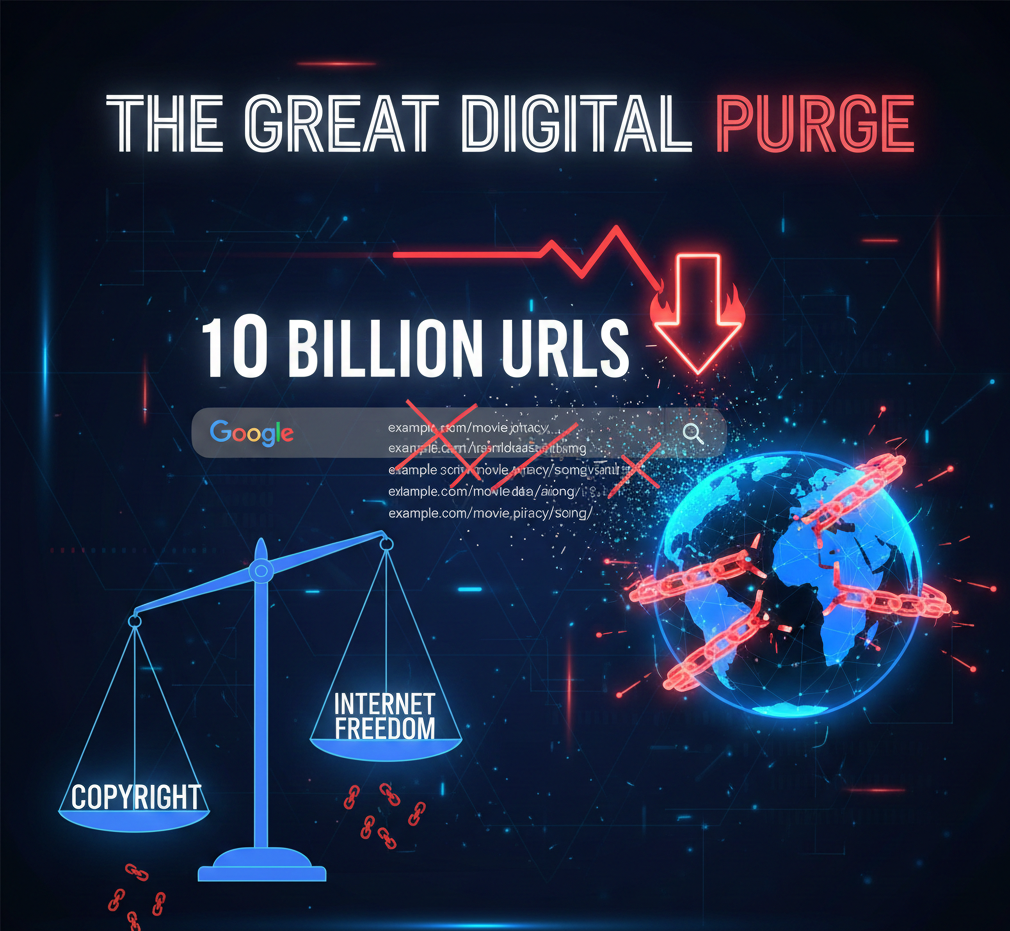
In a staggering development that’s reshaping the digital landscape, Google has processed over 10 billion URL removal requests since 2012, with takedown demands accelerating dramatically in recent years. This unprecedented content purge—affecting everything from pirate sites to legitimate archives—raises critical questions about copyright enforcement, censorship, and the future of online information access.
Related: How Google’s Algorithm Updates Impact SEO
📊 The Scale of Removal: By the Numbers
-
10 billion+ URLs targeted for removal from Google Search since 2012
-
749 million URLs removed from a single prominent archive site
-
Exponential growth in requests over the past 24 months
-
Thousands of smaller websites affected, with millions of pages deindexed
Internal Link: Understanding Google Deindexing – Complete Guide
🔍 The Driving Forces Behind the Takedown Tsunami
1. Automated Anti-Piracy Operations
Rights-holders and anti-piracy firms now employ sophisticated automation tools that can generate thousands of takedown requests per minute. These systems often cast wide nets, targeting not just obvious piracy sites but also:
-
Educational repositories
-
Digital libraries
-
User-generated content platforms
-
Historical archives
External Resource: Digital Millennium Copyright Act (DMCA) Overview
2. Global Legal Pressure Intensifies
-
Expanded DMCA enforcement with international reach
-
Government-backed content removal requests increasing globally
-
Publisher consortiums coordinating large-scale takedown campaigns
-
Cross-border copyright agreements enabling easier enforcement
Internal Link: International Copyright Laws Explained
3. Google’s Compliance Machinery
While Google publishes quarterly Transparency Reports detailing removal requests, the company acknowledges these reports offer “only a glimpse” of the actual takedown volume. The real numbers—including automated filtering and preemptive removals—are likely significantly higher.
⚠️ The Dual-Edged Sword: Impacts and Implications
The Positive Outcomes ✅
-
Enhanced copyright protection for creators and publishers
-
Reduced prominence of malicious and pirate sites in search results
-
Support for legitimate platforms that respect intellectual property
-
Cleaner user experience with fewer risky or illegal content sources
External Resource: Copyright Protection Best Practices
The Alarming Consequences ❗
1. Collateral Damage to Legitimate Content
Recent cases demonstrate widespread over-blocking:
-
Academic research papers removed alongside pirated textbooks
-
Fair-use commentary and criticism caught in automated filters
-
Historical documents and public domain works mistakenly targeted
Internal Link: What is Fair Use? Complete Guide
2. The Transparency Crisis
-
Most users receive no explanation when content disappears
-
Appeal processes remain opaque and inaccessible for many
-
Fraudulent claims can take weeks or months to reverse
-
No consistent standards for distinguishing legitimate from abusive claims
External Resource: Electronic Frontier Foundation on Takedown Transparency
3. Threat to Information Diversity
-
Niche and independent websites disproportionately affected
-
Specialized knowledge bases and forums vanishing from search results
-
“Chilling effects” on smaller creators and publishers
-
Concentration of visible content among major, legally-resourced platforms
🚨 Case Studies: When Takedowns Go Wrong
The Archive.org Dilemma
The Internet Archive—a vital digital library preserving historical content—has faced massive deindexing, with 749 million URLs removed despite containing predominantly lawful, educational, and historical materials.
Internal Link: How to Backup Your Website Like Internet Archive
The Competitive Weaponization Scandal
In 2023, Google filed a landmark lawsuit against entities accused of “weaponizing” the DMCA system. These bad actors allegedly submitted fraudulent takedown requests targeting hundreds of thousands of URLs belonging to competitors, demonstrating how copyright claims can be abused for anti-competitive purposes.
External Resource: Google’s Lawsuit Details
Academic Research Under Fire
Several university repositories and open-access research platforms have reported significant portions of their content removed from search results, affecting everything from historical photographs to scientific pre-prints that posed no copyright threat.
📈 The Data Doesn’t Lie: Tracking the Trend
| Year Range | Takedown Requests | Growth Rate | Notable Developments |
|---|---|---|---|
| 2012-2015 | First 1 billion | Gradual | Early DMCA systems established |
| 2016-2019 | Next 3 billion | Accelerating | Automation tools proliferate |
| 2020-2022 | Additional 4 billion | Rapid | Pandemic-era digital shift |
| 2023-2024 | Final 2+ billion | Explosive | AI-powered detection & global enforcement |
Data compiled from Google Transparency Reports and independent analyses
Internal Link: SEO Impact of Content Removal
🛡️ Protection Strategies for Content Creators & Publishers
For Individual Creators & Small Publishers:
-
Implement robust backup systems using multiple hosting solutions
-
Utilize decentralized platforms like IPFS or blockchain-based archives
-
Document your copyright ownership with timestamps and registration
-
Understand fair use guidelines and assert your rights appropriately
-
Diversify your audience channels beyond search engine traffic
Internal Link: Content Protection Checklist
For Researchers & Archivists:
-
Participate in digital preservation initiatives like the Wayback Machine
-
Advocate for library and archive exemptions in copyright reform
-
Create mirrored collections across multiple jurisdictions
-
Engage with legal support organizations like the EFF or Creative Commons
External Resource: Creative Commons Licensing
⚖️ The Legal Landscape: Current Battlegrounds
Pending Legislation & Court Cases
-
The SMART Copyright Act proposing more aggressive automated enforcement
-
Ongoing challenges to Section 512 of the DMCA (safe harbor provisions)
-
International pressure for “upload filters” similar to Europe’s Article 17
-
First Amendment challenges to broad takedown practices
External Resource: U.S. Copyright Office Updates
Industry Responses
-
Google’s counter-notice system improvements
-
Independent audits of automated takedown accuracy
-
Transparency initiatives from platforms like GitHub and Wikipedia
-
Industry coalitions advocating balanced approaches
Internal Link: How to File a DMCA Counter-Notice
🔮 Future Projections & Expert Predictions
Short-Term (2024-2026)
-
Continued acceleration of takedown requests, potentially reaching 15 billion by 2026
-
Increased AI involvement in both detection and defense
-
More legal conflicts over automated enforcement accuracy
-
Growing divide between well-resourced platforms and independent creators
Long-Term Implications
-
Potential “information stratification” where only major platforms remain visible
-
Possible regulatory intervention if over-blocking becomes politically salient
-
Evolution of alternative discovery systems beyond traditional search engines
-
Development of “takedown insurance” or legal defense networks
Internal Link: Future of SEO Predictions
🎯 Actionable Recommendations for Stakeholders
For Internet Users:
-
Support independent archives and digital preservation efforts
-
Use multiple search engines and discovery tools
-
Report obviously erroneous takedowns when encountered
-
Educate yourself about digital rights and fair use
For Policy Makers:
-
Demand greater transparency from platforms about removals
-
Consider safe harbor modifications that protect against abuse
-
Support public interest exceptions for archives and education
-
Fund independent research on takedown impacts
External Resource: Stanford’s Copyright & Fair Use Center
For Technology Companies:
-
Invest in more nuanced detection systems that reduce false positives
-
Create clearer appeals processes with human review options
-
Publish more detailed data about takedown sources and accuracy
-
Collaborate on industry standards for balanced enforcement
💭 The Fundamental Tension: Protection vs. Preservation
The explosive growth in URL takedowns represents perhaps the most significant transformation in how information flows through the internet since the advent of commercial search engines. We’re witnessing a fundamental renegotiation of the digital social contract—one that balances:
Copyright protection against information access
Commercial interests against public knowledge
Automated efficiency against human judgment
Global enforcement against local context
Internal Link: Digital Ethics in SEO
📢 The Call to Action
As this trend accelerates, passive observation is no longer an option. Every internet user, creator, and publisher has a stake in the outcome. The choices made in the coming months—by platforms, policymakers, and the public—will determine whether we create a digital ecosystem that:
❌ Prioritizes removal over preservation and automation over accuracy, or
✅ Develops balanced systems that protect rights while preserving our collective digital heritage
The 10-billion-URL milestone isn’t just a statistic—it’s a warning sign and an opportunity. How we respond will shape the internet for generations to come.