
















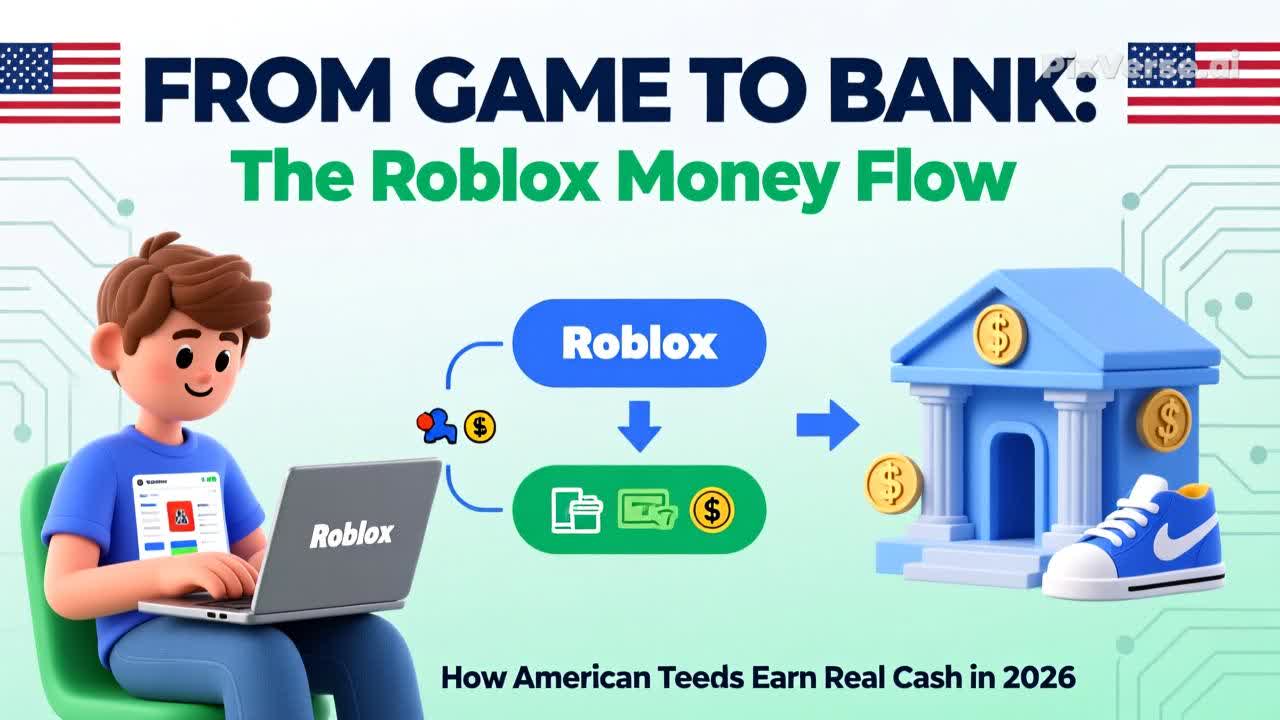
The gaming industry has changed massively. The traditional normal Sega and the Sonic rolling to collect rings isn’t even a basic standard. Over time, the gaming enthusiasts have changed the industry. Now there are featured gamers playing day and night. Roblox is a new obsession among young teens. They not only play the game but also earn. But parents are amazed. Why?
They aren’t aware of what their child is doing on the internet. The blog explains how these kids are making real money and the tax trap they might run into. So let’s start!
Introduction to Roblox
Roblox is a gaming platform that has a large active user base globally.
It is built on the concept of the metaverse, along with a unique economic model of virtual currency.
It was launched in 2006 by American game developer RobloxCorporation. The platform currently has 151.15M active users in 2026. The game was also listed on the New York Stock Exchange in 2021.
Why Parents Don’t Understand Roblox Money?
Parents don’t understand Roblox money because of loss of parental control, just playing the concept, lack of social capital, and no clear milestones.
Let’s further understand this.
Loss of Parental Control
As guardians and someone who wants the best for their children, parents are always concerned. And because they are from a different mindset, the traditional jobs are the only ones that pay. This also aligns with Stanley Cohen’s theory called the moral panic.
Moral panic in this regard means when a child makes money in a space that parents don’t understand. As a result, it triggers the fear of the unknown.
Just Playing
Parents see the child play and assume they are sitting and enjoying themselves. What they don’t know is that they are managing communities, coding, and debugging. Consequently, they avoid the cognitive load the child carries.
Lack of Social Capital
The neighbour living next door, his son, is an intern at a well-known law firm. These statements are usually the reason parents worry. The success is socially invisible, making them and their child feel worthless.
No Clear Milestones
Roblox full-time players don’t have a career path. For a long time, the earring system in our society has had a set milestone. Going up the career ladder and achieving a car, family, and a house, everything has a time. Parents don’t see their child running in the race, which makes them anxious.
Monetization Strategy Roblox Use
Roblox names its platform-specific money as Robux. As soon as the user purchases it, they see a platform-designed pop-up like below.
The picture above shows a prompt to use Robux to buy the currency. In the virtual space, buying $10,000 requires 10 Robux. After the purchase, a next pop-up suggests buying 80 Robux instead. Throughout the games, there are several small options for purchases.
Then there are the crushers that you need to cut to smash things. The game gives you money for each crush time.
In short, the user spends money on Robux. He spends Robux dollars, then spends them on buying crushers. After smashing, the players are awarded money.
The game also has advergames by a company or a third party whose entire world design and objectives are based around an advertising stimulus. Like Maybelline NY Cosmetics advertisements (undisclosed)
There were Vans product placements throughout the game for advertising content. Both the content and the creator make money by adding their own creativity.
The Turning Point: Virtual Robux Becomes Real IRS Liabilities
While earning money through creativity and brand placements is exciting, many young creators fail to realize that the virtual currency they handle has legal definitions in the physical world. The moment Robux or sponsorship deals are converted into US dollars or exceed basic income limits, they trigger strict federal regulations.
Virtual success does not exempt a minor from state and federal laws. In fact, due to recent legislative updates, the line between an amateur gamer and a tax-paying self-employed individual has become thinner than ever.
Unknown Taxes
Many underage gamers in the US have a misconception that their income is scattered and will not be detected by the IRS (Internal Revenue Service). Hence, there are no taxes paid. These practices are dragging people into a quagmire of steep back taxes.
- First, the previously enacted American Rescue Plan Act temporarily lowered the Form 1099-K filing threshold to an annual total transaction volume of $600, with no minimum number of transactions required.
- Second is the Unified Wellbeing Act 2025, which restores the federal filing threshold of an annual transaction volume of $20,000. However, five states, including Vermont and Massachusetts, will retain or reinstate the low filing threshold of $600 to $1,000.
- Third, many third-party platforms issue Form 1099-K to creators that meet the old threshold. Even for minors with self-employment incomes reaching to $400 required to file a tax return.
Strategies to Keep Track of Income and Tax
Jason is a 17-year -old game streamer. He earned $84,000 in content creation. With no awareness about tax filing, he led to a final back tax bill of $14,000. The case is an example of tax debt risk.
- To help you avoid the risk, below are four actionable compliance measures:
- Maintain a simple daily income log.
- After receiving payment, set aside 20-30% of the sum.
- Underage creators must involve parents when income exceeds.
- If you plan to expand, consult a certified public accountant familiar with tax rules for self-employment, the gig economy, and minor-reported income.