







Is Apple Quietly Preparing Its Biggest Transformation Yet?
For over ten years the smartphone world has been on a beat.
Each year a new iPhone comes out. It is quicker a bit improved, a bit more polished—and then the pattern starts again.
But something feels different about 2026.
Most people will probably look at the iPhone 17. However, the big change might not be the phone. It might be the idea behind it. Apple Inc. Seems to be getting ready for a change. This change is not, about making hardware better.
But a move towards an entirely new computing philosophy.
This change is not just about making better devices. It’s about redefining how users interact with technology altogether.
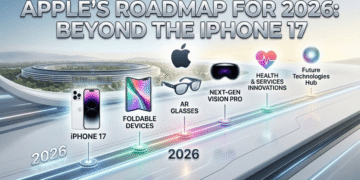
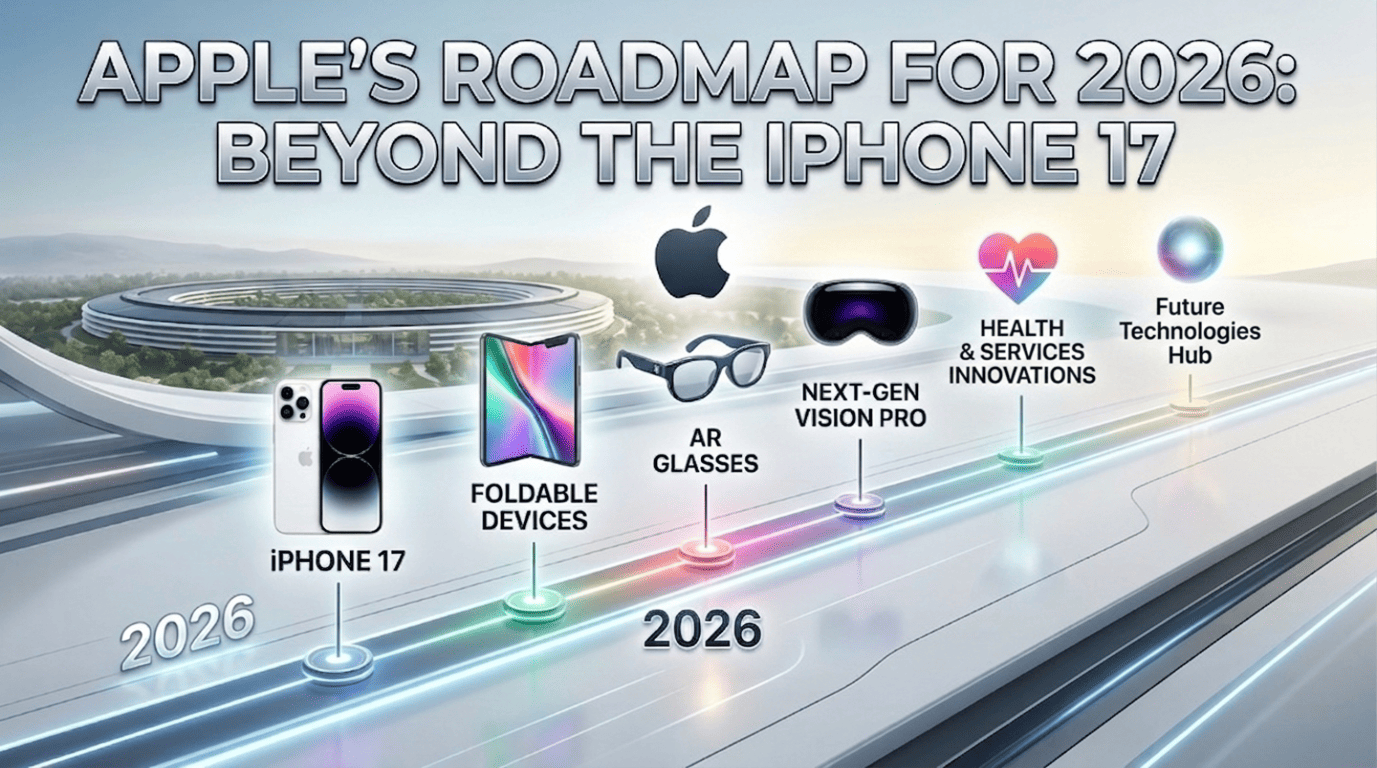
From intelligence driven tech to foldable phones to new Mac computers and wearable devices Apple roadmap for 2026 show something much bigger than just a new product launch.
So, the real questions are:
- Is Apple preparing for the next computing era?
- Can it maintain dominance in a rapidly changing AI world?
- And what happens when devices stop being “tools” and start becoming “assistants”?
Let’s explore.
📱 The Foldable iPhone: Breakthrough or Overhyped Experiment?
It is one of the most discussed possibilities in Apple’s 2026 roadmap.
At its core the idea is easy to understand. It is a device that works like a smartphone when it is closed. When you open it the screen gets bigger.
On paper, this solves a clear problem—screen size limitations.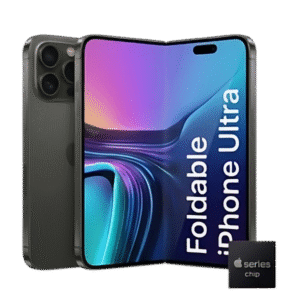
But reality is more complicated.
Foldable phones are already here in the Android world. For example, there is the Samsung Galaxy Z Fold. These phones are pretty cool. They still have some problems.
Some of the issues they face are:
- Durability worries
- Prices
- Software problems
- Crease and hinge issues
Apple does not usually try to be the first in a category. Instead, Apple waits until it thinks it can make something better.
If Apple makes a foldable iPhone, it will not just be, about folding a screen. It will focus on making it much easier to use, getting battery life and making sure it lasts a long time.
Here is the deeper question:
👉 Do users actually need a foldable phone or is this just something that is new and interesting to look at?
If Apple cannot answer that clearly, even the best design may struggle to gain mainstream adoption.
⚙️ iPhone Strategy: From Devices to Segments
Of treating all users, the same Apple is expected to make its series clearer.
- Entry-level models for mass accessibility
- Mid-tier models balancing performance and price
- Pro models powered by advanced AI-driven camera systems
- Future devices featuring under-display Face ID
This change is not about the technology. It is about the overall plan.
Apple is changing its approach to device development.
Now each device is designed for a type of user experience.
This is different from before when new devices were slightly better versions of the previous year’s model.
Pricing and partnerships with carriers in the US will also affect how people adopt new devices.
In simple terms, the iPhone is no longer just a product line.
The iPhone is becoming an ecosystem within itself.
💻 Mac Evolution: The Rise of Intelligent Machines
The Mac computers are going to change a lot with the M5 Chip. People are talking about how fast the new Mac computers will be. That is not the whole story.
The new Mac computers will be faster that is for sure.
But the real change is actually happening underneath. It is moving towards making devices smarter on their own which is what is called, on-device intelligence.
Instead of relying on a lot on cloud servers future Macs might handle AI tasks locally.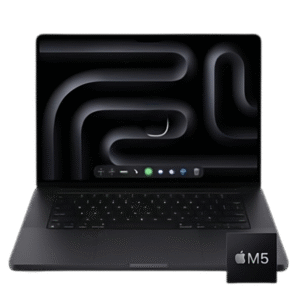
This has some advantages:
- Faster response
- Privacy
- Less delay
- Better ability to work offline
This change is really important now because people are more worried, about keeping their data safe.
Expected upgrades:
👉 New MacBook Air and MacBook Pro models are going to have the M5 Chip.
👉 They are expected to upgrade Mac Studio and Mac mini.
Some of the rumored features include:
- OLED Displays
- A touchscreen integration
I think the idea of a touchscreen is especially interesting, on MacBooks.
For a time, Apple kept macOS and touch interfaces completely separate.. If they start to blend together it could change how professional computers work.
Think about a world where MacBooks and iPads do not seem like two things. They could be part of one system.
Apple might be looking into making this happen.
📊 iPad: The Quiet Move to Replace Laptops
The iPad has always been in a spot. It’s way more powerful than a phone but not really a laptop. However, 2026 might just change that.
Here are some reasons why:
- The iPad is getting better at multitasking.
- It will have processors.
- The display technology is also improving.
With these changes the iPad might finally become a tool for people who need to get work done.
The iPad is getting closer to being a laptop replacement.
Expected improvements:
👉 Faster chips in every model
👉 Better support for displays
👉 Advanced features for multitasking
👉 Improved app ecosystem
If the iPad becomes too powerful, it risks overlapping with the Mac. And Apple has historically avoided its products compete with each other.
However, the iPad will probably change a bit at a time. But these changes will be important. The iPad will still be the iPad, a better version of itself.
🤖 Apple Intelligence: The Core of the Entire Ecosystem
The main thing that will define what Apple does in 2026 is Apple Intelligence.
Apple Intelligence is different from artificial intelligence tools.
Apple is putting intelligence into every part of its system: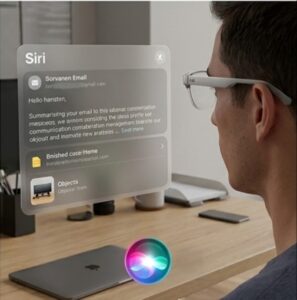
- iOS
- macOS
- iPadOS
This means that all of Apple’s devices can work together in a way.
One big change that people are expecting is, with Siri.
Siri will not just be a voice that helps you with things you ask. Apple Intelligence will make Siri a digital friend that really understands what you need.
Future capabilities may include:
👉 Summarizing emails and documents
👉 Understanding cross-app behavior
👉 Doing multi-step tasks automatically
👉 Giving suggestions based on usage pattern
While others rely heavily on cloud-based AI processing, Apple is prioritizing on-device intelligence.
This has a trade-off:
- Less raw power compared to cloud models
- Significantly stronger privacy and security
In today’s environment that trade-off might actually be a competitive advantage.
Because users are no longer just asking:
👉 “What can AI do?”
They are asking:
👉 “Where does my data go?”
⌚ Wearables: Health Becomes the New Battlefield
The Apple Watch is already doing more than tracking fitness. But it might get even better at helping us stay healthy.
Here are some updates that might be coming:
👉 Detailed information about our bodies
👉 Better analysis of how we sleep
👉 Features that help track blood pressure
👉 More insights into our health over time
Apple is taking its time with health technology. They are being very careful. Health tools need to be approved. They have to work just right.
That is why Apple wants to make sure these health tools are accurate. They do not want to rush things.
The AirPods might become more than something you listen to music with. They might be able to track what is going on around you or what is happening with your body.
This is part of an idea: Apple is making devices that you wear, like the Apple watch into tools that can check your health all the time. Apple is slowly turning these wearables into health monitoring systems.
🧠 Beyond Devices: AR Glasses and Home Robotics
AR Glasses
Apple is making glasses that are light and meant for everyday use.
These glasses are not like headsets. They are supposed to be normal looking and help with things, like:
- Getting information away
- Finding your way around
- Getting help when you need it
If Apple succeeds people might not need to depend on their smartphones much.
Home Robotics
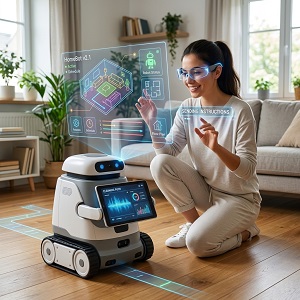
Another long-term experiment involves home robotics.
Apple is working on a tabletop assistant that could:
- Move a bit in a space
- Interact in a more natural way
- Provide contextual help
We’re still in the stages but this idea is part of a bigger goal: taking technology from just showing things on screens to being part of the world, around us.
🧠 Our Analysis: Can Apple Actually Make This Happen?
From a strategy point of view Apples roadmap for 2026 is both cool and a bit scary.
The company is trying to change things at the same time:
- New device types
- AI working across all platforms
- Redesigned hardware
- Unified ecosystem
Each of these tasks is tough on its own. Together they make one of the tech changes in recent years.
The foldable iPhone for instance needs to be as good as or better than Samsung in terms of usability.
At the time Apple Intelligence has to compete in an AI world that’s changing fast with cloud-based models leading the way.
However, Apple still has an advantage:
👉 Its ecosystem.
Few companies can match how well Apple combines hardware, software and services.
📈 What This Means for Users and the Tech Industry
For users things are about to change in a way.
Technology is going to get:
- More predictive
- More tailored to our needs
- Less manual
For the tech industry this is a game-changer. It means:
- AI competition is about to heat up
- Companies will have to innovate with hardware
- It’s not about individual devices anymore. It’s about how they all work together
🏁 Conclusion: The Beginning of a New Apple Era?
Apples roadmap for 2026 do not mainly focus on the iPhone 17. Instead, they focus on all the products and technologies. These include Apple Intelligence, Mac computers with M5 chips, possible foldable devices and future augmented reality systems.
Company wants to create a connected and smart ecosystem. Not everything they try will work out. Some ideas may take a time to develop while others might not happen at all. One thing is certain. Apple is not just making changes to its products but trying to change how people use technology.
If even some of these plans succeed 2026 could be a year for Apple. It might mark the start of an era, in computing.