














Imagine you’re living in rural America. Lots of open land a peaceful life, no city noise. It sounds perfect. Right?
But you realize your internet is really slow. Even it struggles to load a Zoom call.
That is where the big question starts:
👉 Starlink vs Fiber Optic: Best Rural Internet in America?
Let TheHelperTech help you break it down.
📊 Starlink vs Fiber Optic Internet (Quick Overview)
Before going deep, here’s a simple comparison:
| Feature | Starlink | Fiber Optic Internet |
| Technology | Satellite-based | Wired fiber cables |
| Speed | 50–350Mbps | 1–10Gbps |
| Latency | 20–60ms | 1–10ms |
| Availability | Almost nationwide | Mostly urban/suburban |
| Installation | Easy DIY setup | Requires infrastructure |
| Weather Impact | Yes | No |
| Best For | Rural & remote areas | High-performance users |
👉 At first look, fiber looks better.
🚀 What Is Starlink Internet?
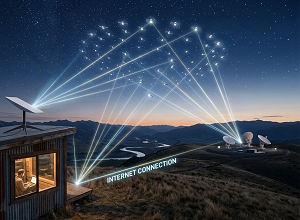
Starlink is a satellite internet service. It is developed by SpaceX.
It uses Earth orbit satellites. These satellites deliver internet to your home. They do not use cables.
💡 Why Starlink matters for America:
- There is no need, for cables.
- Starlink works in farms. It works in mountains. Deserts too.
- The setup is quick. You just plug it in. It works.
👉 In simple terms:
If you can see the sky, you can probably use Starlink Internet.
⚡ What Is Fiber Optic Internet?
Fiber optic internet is really the most reliable way to get internet now.
It works with signals that go through fiber cables to give us: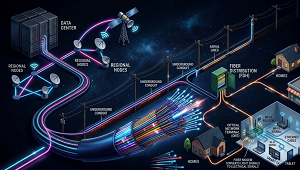
- Ultra-fast speeds
- Low latency
- Stable connection
But there is a problem, with this:
👉 Needs infrastructure to work. And a lot of rural areas just do not have this infrastructure.
⚡ Speed Comparison: Realistic Expectations
Let’s talk about internet speed.
📶 Fiber Optic Internet:
- Up to 1–10Gbps speeds
- You get fast downloads and uploads.
- Best for people who work from home and heavy internet users.
🚀 Starlink:
- Around 50–350Mbps speeds
- This is more than speed, for most homes.
- The speed can change a bit depending on the weather. Where you are.
🎯 Real-world usage comparison:
| Task | Starlink | Fiber |
| Netflix 4K streaming | Smooth | Perfect |
| Zoom meetings | Stable | Excellent |
| Online gaming | Good | Best |
| Large file downloads | Moderate | Extremely fast |
| Multiple users | Good | Excellent |
👉 Conclusion: Fiber is faster—but Starlink is more than usable for everyday life.
Latency: The Hidden Difference
Latency is something people often forget about but it really affects activities that need to happen in real-time.
Fiber: 1 to 10 milliseconds
Starlink: 20 to 60 milliseconds
Why this matters:
- Gaming
- Live video calls
- Trading platforms
Fiber feels instant because it is really fast.
Starlink has a delay. But most people will not even notice it.
When you are just browsing, streaming or working from home you probably won’t notice difference between both.
Availability: The Biggest Factor in Rural America
This is where the whole debate changes.
🌍 Starlink:
- Works in rural and remote areas
- Does not need cable infrastructure
- Can be used anywhere with a clear view of the sky
🏙️ Fiber:
- Only available in cities and suburbs
- Costs a lot to expand into areas
- Not available, in many farming communities
💬 Reality check:
In rural parts of the United States people are choosing between:
- Starlink
- DSL, which is very slow internet
- No reliable internet at all
👉 That’s why people are adopting Starlink fast.
Starlink is becoming popular quickly because it is one of the options for reliable internet, in these areas.
💰 Cost Comparison (US Reality)
When it comes to making a decision money often plays a role.
🚀 Starlink:
- The equipment costs around $599 at first.
- You pay $120 every month.
⚡ Fiber Optic Internet:
- The installation fee is usually low or sometimes even free.
- You can expect to pay, between $70 and $90 every month.
📌 Long-term cost view:
| Factor | Starlink | Fiber |
| Setup cost | High | Low |
| Monthly cost | Higher | Lower |
| Rural installation feasibility | Easy | Difficult/expensive |
🌧️ Reliability:
Fiber Optic Internet:
- Extremely stable
- No weather impact
- Very low downtime
Starlink:
⚠ Can be affected by:
- Heavy rain
- Snow
- Physical obstructions (trees/buildings)
Starlink performance has improved. Most of its users report that it works well every day for their jobs and for entertainment.
🧠 Real-Life Scenarios: What Actually Matters
Let’s make this practical.
🏡 Remote Worker in Rural Area
Needs:
- Zoom calls
- Cloud access
- Connection
👉 In this case Starlink works well.
🎮 Gamer in Suburban Area
Needs:
- Low latency
- Fast response time
👉 Fiber is clearly the choice here.
👨👩👧 Families
Needs:
- Streaming
- Multiple devices
- Consistent internet
👉 Both works, but fiber feels smoother if available.
Off-Grid Rural Living
The goal is to have any internet connection at all.
👉 Starlink becomes the practical solution here.
Why This Matters in the United States:
The internet is still not available everywhere in the United States.
Major internet providers like Verizon and AT&T focus a lot on cities and the areas around cities.
This means rural communities have to use:
- Older DSL systems
- Limited broadband coverage
- Satellite solutions like Starlink
The internet gap in the United States is exactly what Starlink is trying to solve.
🧠 Our Honest Take
Let’s be real.
Fiber optic internet is the best.
No question about it.
Having good tech doesn’t mean it works for everyone.
If fiber optic doesn’t come to your home, it’s not helpful.
Starlink is not trying to beat fiber optic internet.
It is solving an issue:
Providing good internet where regular systems don’t work.
⚖️ Final Verdict: Starlink vs Fiber Optic Internet
When it comes to choosing between Starlink and Fiber Optic Internet the situation really matters.
| Situation | Best Choice |
| Fiber available | ✅ Fiber Optic Internet |
| Rural / remote area | 🚀 Starlink |
| Heavy gaming / professional use | ⚡ Fiber |
| No infrastructure area | 🌍 Starlink |
🧾 Conclusion
The Starlink vs Fiber Optic Internet debate is really about how easily people can access the internet and what they actually need in their daily life.
Fiber Optic is faster and more stable. It is also cheaper in places where it’s available.
On the other hand, Starlink brings internet to people who live in areas where Fiber Optic Internet’s not available.
At the end, the best internet is not the one that’s the fastest. The best internet is the one that you can actually get and use every day. Starlink is the internet for people who cannot get Fiber Optic Internet.
👉 If you were living in rural America today, would you choose Starlink for instant access or wait for fiber even if it takes years to arrive?
👉 Do you think Starlink is a long-term solution or just a bridge until fiber expands everywhere?