


















🚀 The Smart Assistant Era Is Changing —Fast
Amazon’s Next-Gen Alexa, a years ago, talking to your smart speaker was really frustrating. You had to say things again and again in a specific way. Even then, the response was often incomplete.
Many users experienced the same frustration: “Sorry, I didn’t get that.”
But today, things are changing dramatically.
You say,
👉 “Alexa I had a tough day. Plan something to help me unwind tonight and order dinner for me, the Alexa.”
Instead of just giving you random ideas it actually gets what you want. It suggests food, places the order for you, changes your lights, and even choose a movie you might like.
This is not futuristic imagination. It is what Amazon is working on with its Next-Gen Alexa powered by advanced Large Language Models (LLMs).
This change is not a small upgrade. It is a total change, in what a voice assistant can do.
🤖 What Is Amazons Next-Gen Alexa?
It is an improvement over the old version of its voice assistant. It uses advanced artificial intelligence models that are similar to ChatGPT and Google Gemini.
However, what makes it different is its purpose.
Alexa is not like chat-based AI tools. It is designed for real-world action not just talking to people.
💡 In simple terms, it can now:
- Understand natural human language
- Remember context from previous interactions
- Perform multiple tasks in sequence
- Respond in a more human-like way
This is a change, from the old way of giving commands to the conversational AI system.
Instead of:
- Turn on lights
- Set alarm
- Play music
You can now say:
“I’m going to sleep early, prepare everything for a relaxing night”.
And Alexa handles the rest.
🧠 How Advanced LLMs Are Transforming Alexa
Language Models are computer systems that are trained on a lot of information.
This includes:
- Text
- Conversations
- Real-world information
Their strength lies in understanding intent rather than keywords.
Traditional Alexa systems only worked with commands. If your phrase didn’t match, it failed.
Now, with this LLM integration Amazon,s Next-Gen Alexa can figure out what you mean even if you say something in a casual way or if your sentence is not very clear. Alexa can understand things better.
🔍 What this means for users:
- You can speak naturally
- You don’t need perfect phrasing
- Follow-up questions are understood
- Multiple tasks are connected intelligently
📊 Before vs After Alexa
| Feature | Old Alexa | Next-Gen Alexa |
| Interaction Style | Command-based | Conversational |
| Memory | None | Context-aware |
| Task Handling | Single-step | Multi-step |
| Responses | Scripted | AI-generated |
👉 Why this matters?
This is the first time a voice assistant feels less like a machine and more like a real digital assistant that understands life situations.
🏡 Real-Life Use Cases in US Homes
The biggest impact of Amazon’s Next-Gen Alexa is not about technology it’s about how people use it every day.
Let’s break it down.
Smarter Cooking Experience:
Cooking becomes interactive and personalized.
You can say:
👉 Alexa, help me cook a dinner in 30 minutes.
Then follow up:
👉 “What if I don’t have garlic?”
Instead of stopping, Alexa adjusts the recipe instantly.
Daily Planning with Alexa:
Alexa is becoming a tool to help organize your life.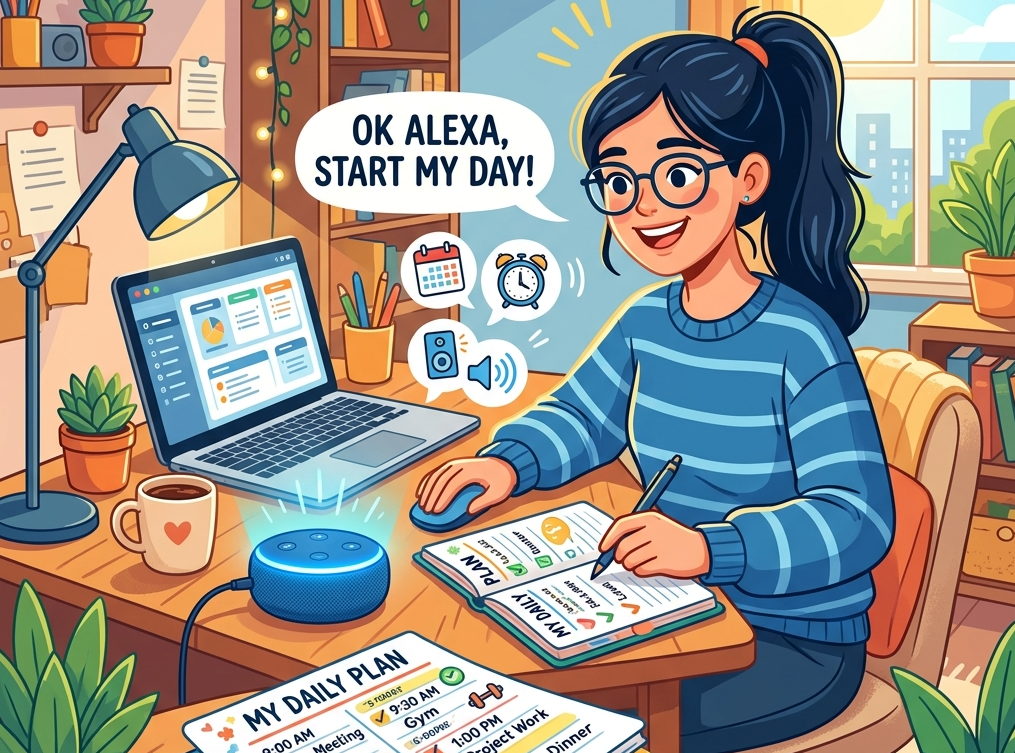
It can:
- Analyze your calendar
- Suggest optimal meeting times
- Adjust reminders automatically
- Help prioritize tasks
Next-Level Smart Shopping:
Shopping becomes predictive and smarter.
Alexa can: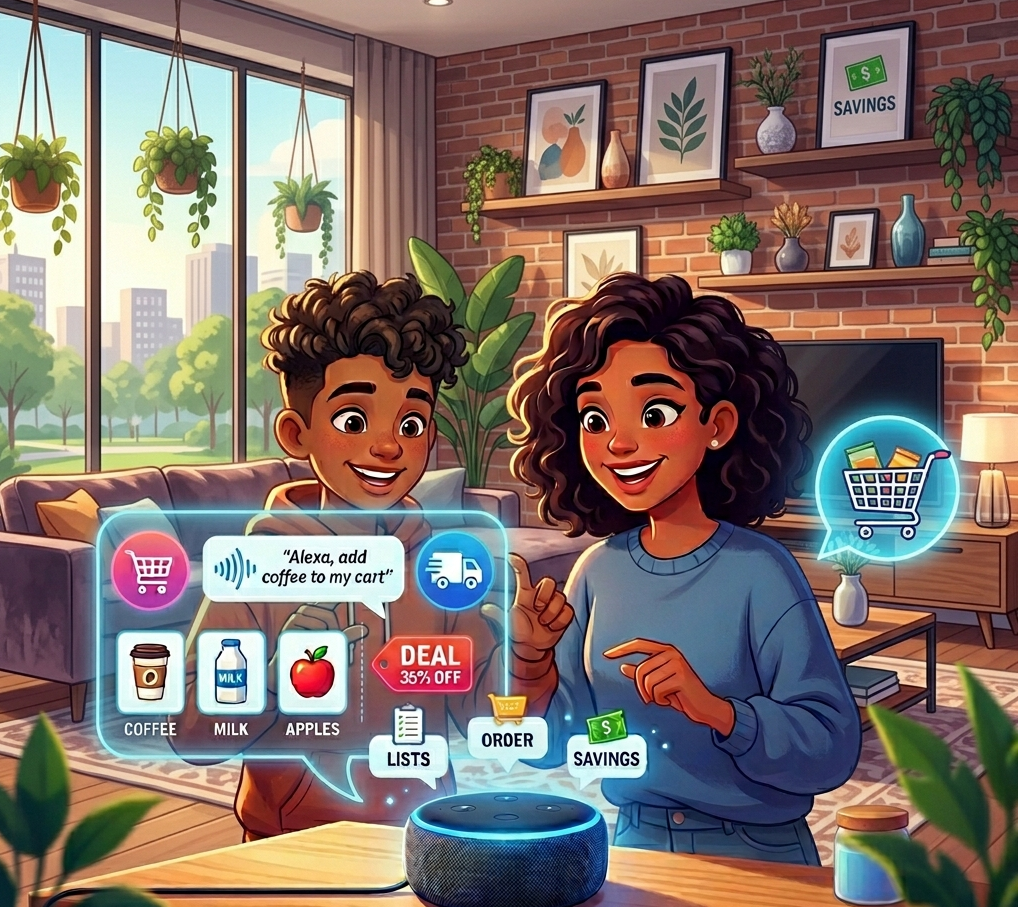
- Compare product options
- Recommend better alternatives
- Reorder frequently used items
- Suggest deals based on usage
For US households already using Amazon services, this creates a deeply integrated ecosystem.
Personalized Entertainment:
Entertainment is now based on how you feel than what you search for.
You can say:
- Something funny but short
- A thriller like I watched last week
- Play something relaxing for sleep
⚡ Alexa vs Other AI Assistants
AI competition is growing rapidly, especially between Amazon, ChatGPT and Gemini.
🆚 Comparison Table
| Feature | Alexa (Next-Gen) | ChatGPT | Gemini |
| Voice Control | ✅ Excellent | ❌ Limited | ✅ Good |
| Smart Home Integration | ✅ Best | ❌ None | ✅ Good |
| Conversational Ability | ✅ Advanced | ✅ Advanced | ✅ Advanced |
| Real-World Actions | ✅ Strong | ❌ Limited | ⚠️ Moderate |
🔐 Privacy & Data
It is a real concern as AI continues to become smarter and more powerful.
⚠️Main risks:
- Continuous voice data collection
- Stored recordings in cloud systems
- Behavioral tracking for personalization
✅ Amazon’s approach:
- Voice history controls
- Privacy dashboards
- Manual deletion options
However, users still need to be aware of the risks of listening devices.
💰 Will Alexa Become Paid?
One of the upcoming changes could be monetization of the Amazon AI feature.
Amazon is reportedly considering a subscription model for advanced AI feature
💡 Possible structure:
| Tier | Features |
| Free | Basic Alexa functions |
| Premium | Advanced LLM-powered intelligence |
📈 Impact on the Smart Home Industry
The new and improved Alexa is not about one device it is about the whole Smart Home Ecosystem.
🔥 Major changes:
- Increased adoption of smart devices
- Strong competition among AI companies
- Faster integration into households
Smart homes may finally shift from luxury to mainstream necessity.
🧩 Challenges Amazon Still Needs to Solve
With advanced artificial intelligence there are still limitations.
key challenges:
- It is not always accurate, in real-world scenarios that’re complex.
- Avoiding incorrect or hallucinated responses
- Maintaining user trust
- Competing with rapidly improving AI systems
- AI is powerful—but not perfect.
🔮 What’s Next for Alexa?
The future plans for Alexa look really exciting.
🌟 Things we can expect:
- Emotion detection and mood sensing
- Personalization based on daily habits
- Working with tools for work and productivity
- Controlling home automation systems
Imagine saying:
👉 “Alexa manage my day.”
Alexa handles emails, reminders, tasks and home settings all by itself.
🧾 Conclusion
The new Amazon’s Next-Gen Alexa is a change from just using your voice to give commands. Now Amazon Alexa is like a person that you can have a conversation with. It is designed to understand natural language, manage multiple tasks, and integrate deeply into everyday life.
This new upgrade can make smart homes really intelligent, personalized, efficient and work better for the people living in them.
However, it also raises important questions about privacy, data security, and subscription-based pricing.
Overall, Alexa is changing from a smart speaker to a real AI friend.
If Amazon can find a balance between trying new things and being honest, with people then it could really change the way people interact with technology.
🧾 Quick Summary
- Alexa now powered by advanced LLMs
- Understands natural, conversational language
- Performs multi-step real-world tasks
- Deep integration with smart homes
- Privacy and pricing remain key concerns
💬 Lets Talk (Your Thoughts Matter!)
- Do you think Alexa’s AI upgrade will make life easier or more dependent on technology?
- Would you pay for a premium AI assistant at home?
- Between Alexa, ChatGPT, and Gemini—who do you trust the most?