















Introduction: The Sleeping Giant Awakens
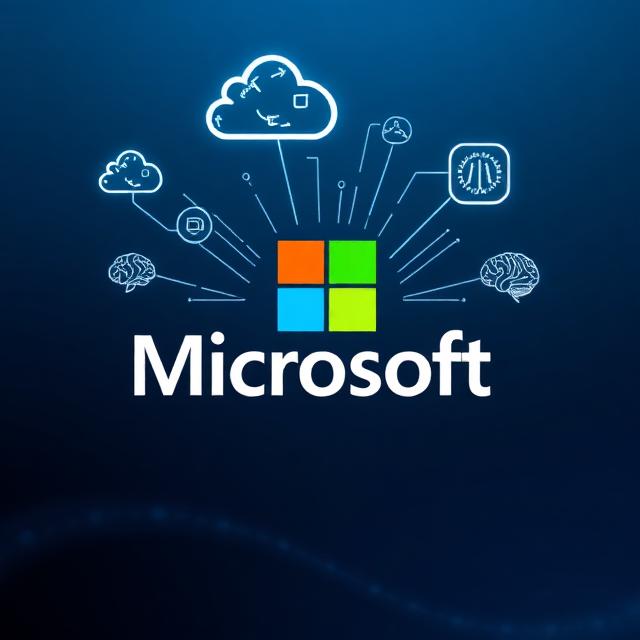
In the collective memory of tech, Microsoft often occupies a paradoxical space. For decades, it was the undisputed king—the provider of the Windows operating system on over 90% of the world’s PCs and the ubiquitous Office suite that defined productivity. Then, for a stretch in the late 2000s and early 2010s, it was cast as the lumbering “sleeping giant,” seemingly missing the mobile revolution and watching innovators like Apple and Google capture the cultural zeitgeist. Today, that narrative has been completely upended. Far from fading into legacy, Microsoft has executed one of the most remarkable corporate turnarounds in history, not just by catching up, but by strategically positioning itself at the epicenter of the next paradigm shift: the AI-driven future.
This isn’t a story of a company simply adding chatbot features. It’s a deep, structural reinvention—a shift from selling software licenses to becoming the world’s digital plumbing, infused with intelligence. Under the leadership of CEO Satya Nadella, Microsoft has embraced a “growth mindset,” transformed its culture, and made pivotal bets that have propelled its market valuation to regularly flirt with the $3 trillion mark. This article will dissect the anatomy of Microsoft’s comeback, exploring its cloud supremacy, its pioneering partnership with OpenAI, and its vision for an AI-powered future that’s reshaping how we work, create, and solve humanity’s greatest challenges.
Part I: The Engine Room – Azure and the Cloud-First Foundation
Before there was an AI revolution at Microsoft, there was a cloud revolution. The true cornerstone of Microsoft’s modern dominance is Microsoft Azure. Launched in 2010, Azure was initially seen as a distant challenger to Amazon Web Services (AWS). However, it has grown into a colossal, global-scale cloud computing platform that provides the essential horsepower for everything else the company does.
-
The Enterprise Bridge: Microsoft’s masterstroke was leveraging its decades-long, trusted relationships with enterprise and government clients worldwide. While AWS excelled with startups and developers, Microsoft provided these large, often cautious, organizations with a seamless path to the cloud. They could integrate Azure with their existing Windows Server environments, Active Directory, and Office 365 suites, creating a hybrid cloud environment that felt familiar and secure. This “enterprise-first” strategy was a game-changer.
-
More Than Just Servers: Azure is not just about virtual machines and data storage. It’s a comprehensive suite of over 200 products and services, including AI and machine learning tools, Internet of Things (IoT) hubs, and massive data analytics capabilities. For developers and businesses, it’s a one-stop shop for building, deploying, and managing applications at a previously unimaginable scale. The revenue from Azure, reported in Microsoft’s Intelligent Cloud segment, has been the company’s primary growth engine for years, consistently posting growth rates above 20% even on a massive revenue base.
This cloud foundation was critical. It created a vast, distributed network of data centers and a massive, recurring revenue stream. More importantly, it gave Microsoft the computational infrastructure and the customer relationships necessary to become the primary platform for the next big thing: artificial intelligence.
Part II: The Strategic Masterstroke – The OpenAI Partnership and Co-piloting the Future
If Azure provided the engine, Microsoft’s multibillion-dollar partnership with OpenAI was the rocket fuel. This wasn’t just an investment; it was a profound, strategic alignment that has defined the current AI race.
-
Beyond Investment – A Deep Integration: Microsoft’s funding and providing of Azure’s supercomputing resources to OpenAI was a stroke of genius. In return, Microsoft secured exclusive licensing agreements to integrate OpenAI’s groundbreaking models (like GPT-4, DALL-E 3) across its product ecosystem. This allowed Microsoft to leapfrog years of internal AI research and deploy the most advanced AI capabilities directly to its billions of users.
-
The “Co-pilot” Philosophy: Microsoft didn’t just slap ChatGPT onto a website. They developed a powerful, integrated vision: AI as a Co-pilot. This philosophy posits that AI should augment human capability, not replace it. It should handle the mundane, accelerate the complex, and unlock creativity, all while keeping the user firmly “in the driver’s seat.”
-
GitHub Copilot: First launched in 2021, this tool revolutionized coding by acting as an AI pair programmer, suggesting whole lines and blocks of code in real-time. It demonstrated the productivity gains possible, with studies showing developers could complete tasks up to 55% faster.
-
Microsoft 365 Copilot: This was the mainstream breakthrough. Imagine an AI assistant woven into the fabric of Word, Excel, PowerPoint, Outlook, and Teams. It can draft documents based on prompts, summarize lengthy email threads, create PowerPoint presentations from a Word outline, and reveal insights in Excel data through natural language commands. It transforms Office from a suite of tools into a collaborative partner.
-
Windows Copilot: Bringing the AI directly into the operating system itself, providing a centralized helper to control settings, summarize content on-screen, and assist with tasks across any application.
-
This pervasive integration strategy is what sets Microsoft apart. It’s making advanced AI a utility, accessible to millions in the tools they use every day.
Part III: The New Battlegrounds – Search, Security, and Developer Tools
Microsoft’s AI ambition is not confined to productivity software. It is using its new capabilities to aggressively compete in markets where it was once an afterthought.
-
Reinventing Search with Bing (and Copilot): For over a decade, “Bing vs. Google” was a non-starter. Microsoft has changed the game by rebranding its search engine as Microsoft Copilot (powered by GPT-4). It’s no longer just about ten blue links; it’s about conversational search, composed answers, and creative assistance. While Google still dominates market share, Microsoft has forced the entire search paradigm to evolve, making AI-native interaction the new benchmark. This has introduced genuine competition into a stagnant market for the first time in years.
-
The AI-Powered Security Stack: In an era of escalating cyber threats, Microsoft’s Security Copilot is a strategic powerhouse. Leveraging its unique vantage point—processing over 65 trillion security signals daily from its ecosystem—it uses AI to detect threats, interpret attack patterns, and guide security analysts. By framing security as an AI problem, Microsoft is positioning itself as the essential, intelligent defender for organizations, deeply integrating security into its Azure and 365 fabric.
-
Empowering the Next Wave of Developers: Through GitHub (which it acquired in 2018) and tools like Azure AI Studio, Microsoft is ensuring it remains the platform of choice for the developers who will build the next generation of AI applications. By providing the tools, models, and infrastructure, it’s fostering an ecosystem that is inherently tied to the Microsoft cloud.
Challenges and the Road Ahead: Navigating the AI Responsibility Frontier
Microsoft’s path forward is not without significant hurdles and profound responsibilities.
-
The Antitrust Spotlight: With its immense size and influence—spanning operating systems, productivity software, cloud computing, gaming (via Xbox and Activision Blizzard), and now AI—Microsoft is back under intense regulatory scrutiny in the US, EU, and UK. Regulators are examining whether its partnerships and integrations constitute anti-competitive behavior in this new market.
-
The AI Ethics Imperative: As a leader, Microsoft faces immense pressure to develop and deploy AI responsibly. Issues of bias in training data, potential for misinformation, job market impacts, and the creation of harmful content are paramount. The company has established an AI ethics board and principles, but the real-world implementation of these guardrails is an ongoing, complex challenge.
-
Sustaining Innovation Pace: The AI race is intensely competitive. Google, Amazon, Apple, and a host of well-funded startups are all pushing boundaries. Microsoft must continue to innovate at a breakneck speed, not just in model development but in creating useful, reliable, and seamless user experiences that justify subscription costs.
-
The Monetization Puzzle: While the potential is vast, fully monetizing AI features like Copilot across its user base is a work in progress. Converting user excitement into sustainable, profitable revenue streams will be critical for long-term success.
Conclusion: Not a Tech Giant, The Platform Giant
Microsoft’s journey from a software licensor to an AI-powered platform company is a masterclass in strategic transformation. It successfully used its legacy strengths as a launchpad, not an anchor. By betting decisively on the cloud and then forming a symbiotic partnership with the leader in generative AI, it secured a pole position in the defining technology shift of our time.
For the US audience—comprising business leaders, developers, professionals, and everyday users—understanding Microsoft is no longer about understanding Windows updates. It’s about understanding the central nervous system of modern digital work and intelligence. Microsoft is betting that its future lies not in being the flashiest device maker or the purest search engine, but in being the essential, intelligent, and trusted platform upon which all other innovation is built. In the AI-first world, Microsoft is no longer the sleeping giant; it has become the architect.














Comments 1